Is DTF going to replace screen printing?
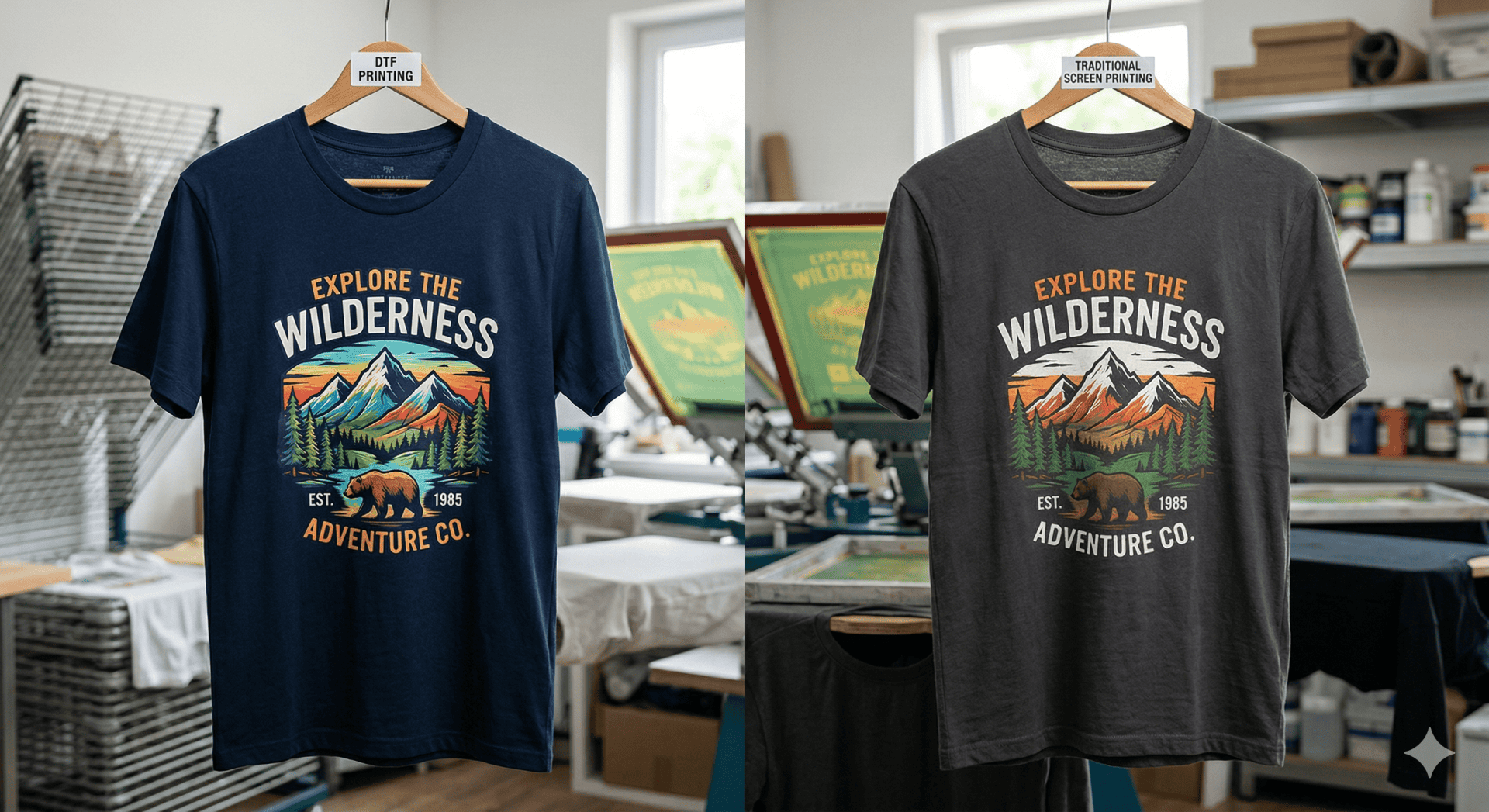
If you browse any print forum right now, that is the number one question popping up. The short answer? Absolutely not. While Direct-to-Film (DTF) has completely revolutionised the garment decoration industry over the last few years, it isn’t here to kill the squeegee, it’s here to protect your profit margins. Traditional screen printing remains the undisputed king of high-volume, cost-effective production and specialty finishes. DTF simply steps in to handle the complex, low-run headaches that used to tie up your press and eat into your day.
For many veteran printers, the rise of digital technology feels like a threat to the craft. But at Screen Print World, we see it differently. The most successful businesses we work with aren’t choosing one over the other; they are building Hybrid Shops.
Here is our expert guide on how to integrate digital printing alongside your traditional setup to maximise efficiency and never turn away a profitable job again.

When to Stick with Traditional Screen Printing
Let’s be clear: nothing beats a well-set-up press. Screen printing is still the backbone of the industry, and it always will be for several crucial reasons:
When to Tag in DTF (Direct-to-Film)
So, if screen printing is so great, why is DTF the biggest buzzword in the industry? Because it solves the jobs that screen printers historically hate.
The Power of the Hybrid Workflow
The magic happens when you stop viewing these methods as rivals and start using them as teammates.
Imagine a local festival orders 1,000 single-colour promotional t-shirts. You set that up on your screen printing press and knock it out fast. But wait they also want 15 full-colour, personalised zip-up hoodies for the event organisers. Instead of groaning at the setup time or outsourcing the work, you simply print the 15 transfers on your DTF machine and press them while the auto press handles the 1,000 tees.
By integrating DTF, you free up your screens and carousels for the big money-makers, while still capturing the high-margin, low-volume custom orders that walk through your door.
You never have to say no to a job again.